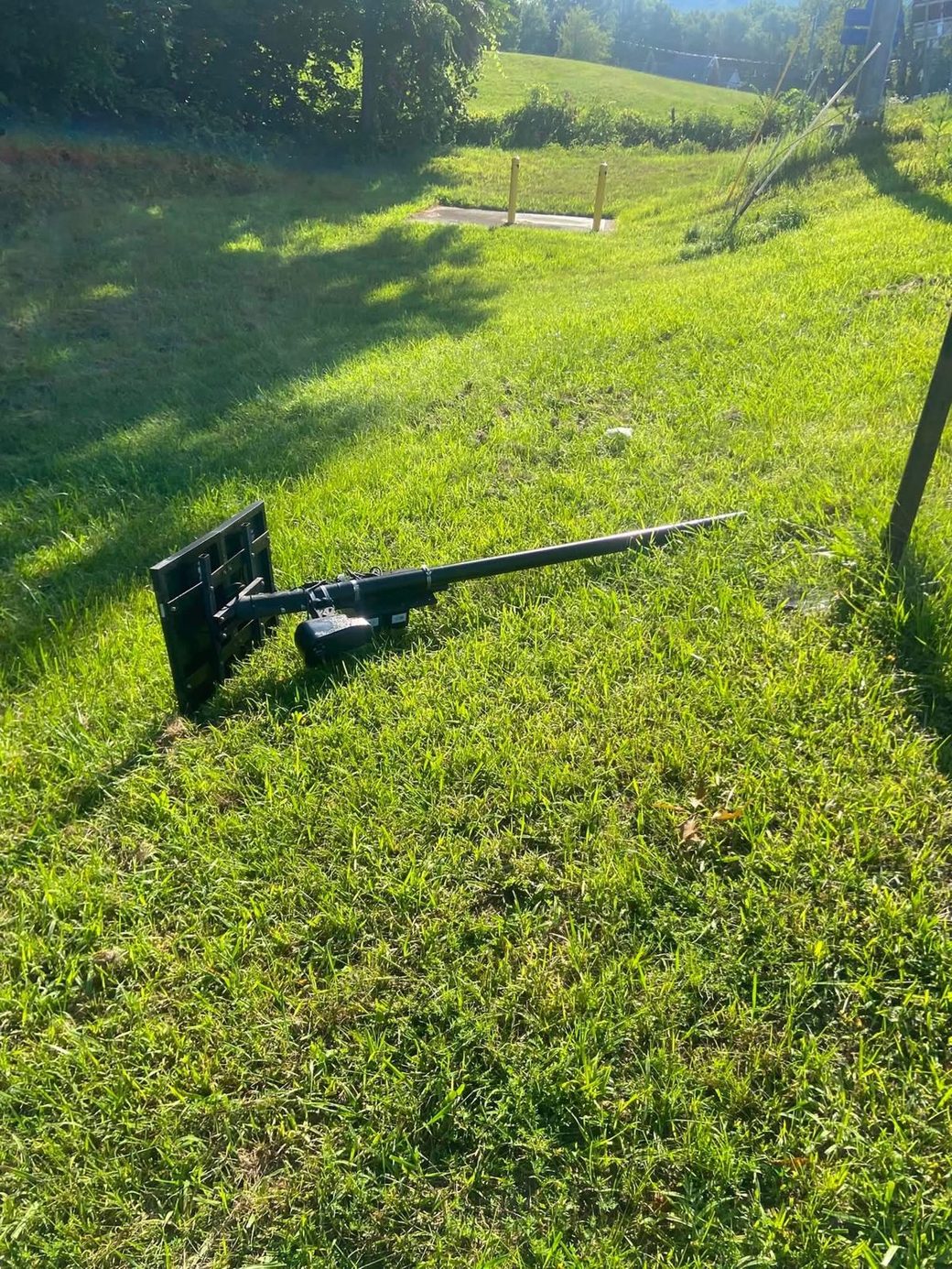
Troy police are investigating after three of the city’s Flock cameras were destroyed late Thursday night, July 23. Investigators believe the vandalism happened between about 11:30 p.m. and midnight, according to WNYT. The damaged cameras were on Hoosick Street, Oakwood Avenue, and Northern Drive — the Oakwood and Northern locations sit in North Troy and Lansingburgh, the stretch closest to Speigletown and a route many neighbors drive daily.
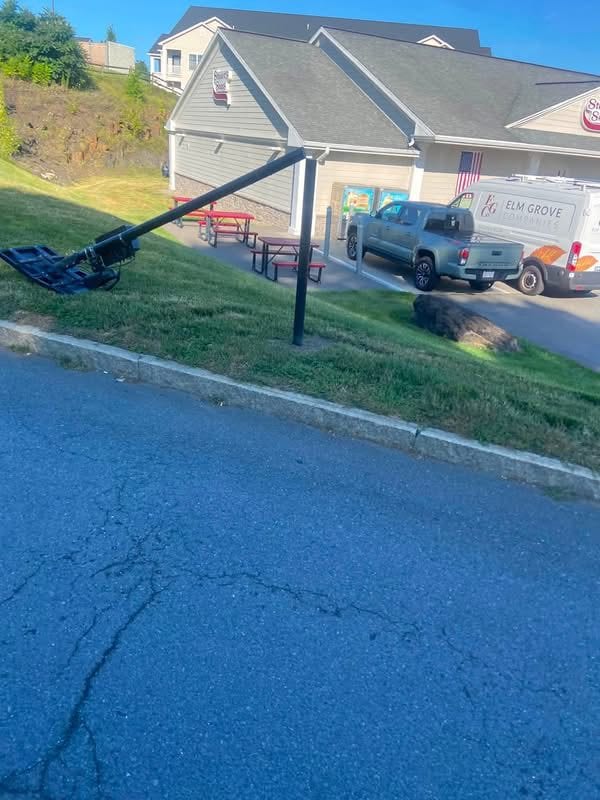
“We will not tolerate this violence,” Troy Mayor Carmella Mantello said.
We don’t condone destroying public or private property, and this is still a developing investigation. But the vandalism didn’t come out of nowhere — Flock’s cameras have been one of the most contested topics in the Collar City for months, and it’s worth laying out plainly why.
What the cameras are
Flock Safety cameras are automated license-plate readers (ALPRs). They photograph every passing vehicle, log its plate, and record the make, model, color, and other identifying details, along with the time and location. Those records are stored in a searchable database and, on Flock’s national network, can be shared with other police agencies. Troy police describe the system as a valuable investigative tool for solving crimes and finding stolen cars or missing people.
Why they’re controversial
The concern is that a network of readers doesn’t just catch wrongdoers — it logs the movements of everyone, continuously, whether or not they’re suspected of anything. Troy residents have rallied against the cameras (as covered by NEWS10), calling them an invasion of privacy and questioning how the collected data is used and who can access it.
Those aren’t just local worries. Nationally, civil-liberties organizations including the ACLU and the Electronic Frontier Foundation have documented recurring problems with ALPR systems in other cities:
- Wrongful stops from bad data. A misread plate or an out-of-date “hot list” has, in documented cases elsewhere, led to drivers being pulled over — and in some reported incidents held at gunpoint — over nothing.
- Data sharing beyond the local department. Records collected for local policing have, in other jurisdictions, been searched by outside agencies for purposes residents never signed up for, raising questions about oversight and consent.
- Profiling and disparate impact. Critics argue camera placement and watch-list practices can fall hardest on particular neighborhoods and groups, turning routine travel into a source of suspicion.
- Insider misuse. The location data is only as trustworthy as the people with access to it. The Institute for Justice has reported on officers in various departments using plate-reader systems to track romantic interests and personal contacts — the kind of abuse that’s hard to catch without strong auditing.
Supporters counter that the cameras solve real cases and that safeguards and audit logs govern their use. Both things can be true at once: a tool can help close investigations and raise legitimate questions about surveillance, retention, and accountability. That tension is exactly what Troy — and every community whose residents drive its roads, Speigletown included — is working through right now.
See where the cameras are
DeFlock, a crowdsourced project, maps reported automated license-plate readers — Flock and others — from public records and community submissions. The map below is centered on the Speigletown and North Troy area; pan and zoom to look around. Because it’s community-maintained, treat it as a starting point, not an official inventory — locations can be missing, out of date, or added after the fact.
What neighbors are saying
Reaction online has been split — sometimes sharply. We’re keeping these paraphrased and anonymous; they’re neighbors’ opinions, not our reporting, and we haven’t independently verified individual accounts.
On one side, plenty of people had no sympathy for whoever cut the cameras down. “Why would you want them gone if you’re not doing anything wrong?” was a common refrain, along with a wry note that the cameras probably photographed the person who destroyed them on the way by.
Others pushed back hard on the privacy front — calling the network “Orwellian” and an “invasion of privacy,” and objecting less to cameras in general than to who runs them: “I’m all for more cameras — just not Flock. Public surveillance should be handled by government with public oversight, not a private subscription company answering to its shareholders.”
And some spoke from experience. One resident wrote that a relative’s white car was repeatedly flagged as stolen because its plate was a single digit off from an actual stolen vehicle — a green one — and that he was pulled over more than once in a single day because, as they put it, the system flagged it and officers didn’t check the description. We can’t verify that account, but it captures the specific fear driving the opposition: that an automated hit becomes a traffic stop before a human looks closely.
A separate thread was simply about the money: that taxpayers foot the bill to replace the destroyed cameras, and — from the other direction — that residents who don’t want them can vote for officials who won’t keep paying to rent them. (Flock’s cameras are a subscription service, not a one-time purchase.)
The through-line isn’t “pro-camera” versus “anti-camera.” It’s a community genuinely divided over the trade between catching crime and being watched — and who should hold the data and answer for mistakes.
Update, August 2: new limits on the cameras — and a fight over how they were renewed
When we first published this, we said the open questions were who the data is shared with and what oversight exists. Some of those questions now have answers, and they came out of a genuine institutional fight at Troy City Hall.
How the contract got renewed. The cameras’ contract — about $156,000 over two years, for 26 city cameras — came up for renewal this spring. The City Council tabled it at its March 19 Finance Committee meeting, wanting more information about the surveillance concerns, and directed the city auditor to withhold payment to Flock. On April 2, Mayor Carmella Mantello declared a state of emergency and renewed the contract anyway, arguing the city could face legal risk if it lapsed. The council sued over the use of emergency powers, a step an Albany Times Union editorial — shared with us by a reader — called out bluntly: in the paper’s judgment, the mayor abused her emergency authority, and “not everything is an emergency.” (That judgment is the Times Union’s; the facts beneath it are a matter of public record.)
The new safeguards. Since then, the mayor and Council President Sue Steele have worked out limits that speak directly to the concerns in this article, per the Times Union:
- limits on data sharing with outside agencies — the “who else can search Troy’s records” question;
- restrictions on using the readers for immigration-related activities and for public demonstrations;
- limits on the use of Flock’s national license-plate lookup feature; and
- annual data audits — the auditing that catches the insider misuse documented elsewhere.
What’s proposed next. The council is drafting a charter change to define when a mayor can declare an emergency — reserving it for “a disaster, riot, catastrophe, or similar public emergency” instead of the current, much vaguer “unusual peril to the lives or properties or both of the citizens of Troy” — and to give the council power to terminate a mayor’s emergency orders.
None of this settles the underlying question of whether a private company’s camera network should log every passing car. But it moves the debate to where it belongs: written rules, adopted in public, with audits — instead of bolt cutters at midnight.
What to watch
The investigation into the vandalism is ongoing; anyone with information can contact the Troy Police Department. On the policy side, the concrete things to follow now are the annual data audits the new safeguards call for and the charter-change proposal when it comes before the council. We’ll follow both, and we’ll link the city’s own materials as they’re published.
Reporting from WNYT, NEWS10, the Troy Record via Yahoo News on the April emergency declaration, and an Albany Times Union editorial (print, shared by a reader; timesunion.com). This is a developing story.
Have a tip, correction, or issue of your own?
Submit to the Reader →